How I Work
My work as a Product Designer is to deeply understand a challenge and transform it into an effective digital solution. To do this, I adopt a holistic view, maintain a strong user focus, and collaborate closely with stakeholders and developers across all stages — from discovery to handoff. My process is structured yet flexible, and I use artificial intelligence strategically, not as a shortcut but as a tool to deepen research, validate hypotheses, and elevate the quality of my work.
Updated on
If I had to clearly summarize what I do as a Product Designer, it would be: My job is to understand the depth of a challenge and make a digital solution viable.
I believe that creating a digital product is the result of extensive work in gathering requirements, business rules, and user needs. My role is to understand all these factors and transform them into a solution that addresses the pain points and needs of the people who will use it.
To achieve this, I rely on a few core pillars that guide my working methodology:
Holistic Vision: I deal with multiple distinct entities (companies, technical teams, stakeholders, and users), and the needs of each must be considered in the equation.
User Focus: For a digital product to succeed, it must solve a real user pain point, and this must be considered throughout the entire process.
Learning from Mistakes: Mistakes are inherent to any organic work, but they must become the foundation for acquiring knowledge and improving the process.
Artificial Intelligence: AI should be explored as a tool that enhances the quality of our work — not a shortcut that replaces it.
I base my design process on Design Thinking, adapting its stages to the specific needs of each project, taking into account maturity level, scope size, and deadlines.
During these stages, I place even greater emphasis on empathy (to deeply understand the user, their context, needs, and pains) and on prototyping and testing (to evaluate whether what is being proposed truly aligns with user needs and requirements).
Characteristics of some stages of my workflow:
Discovery
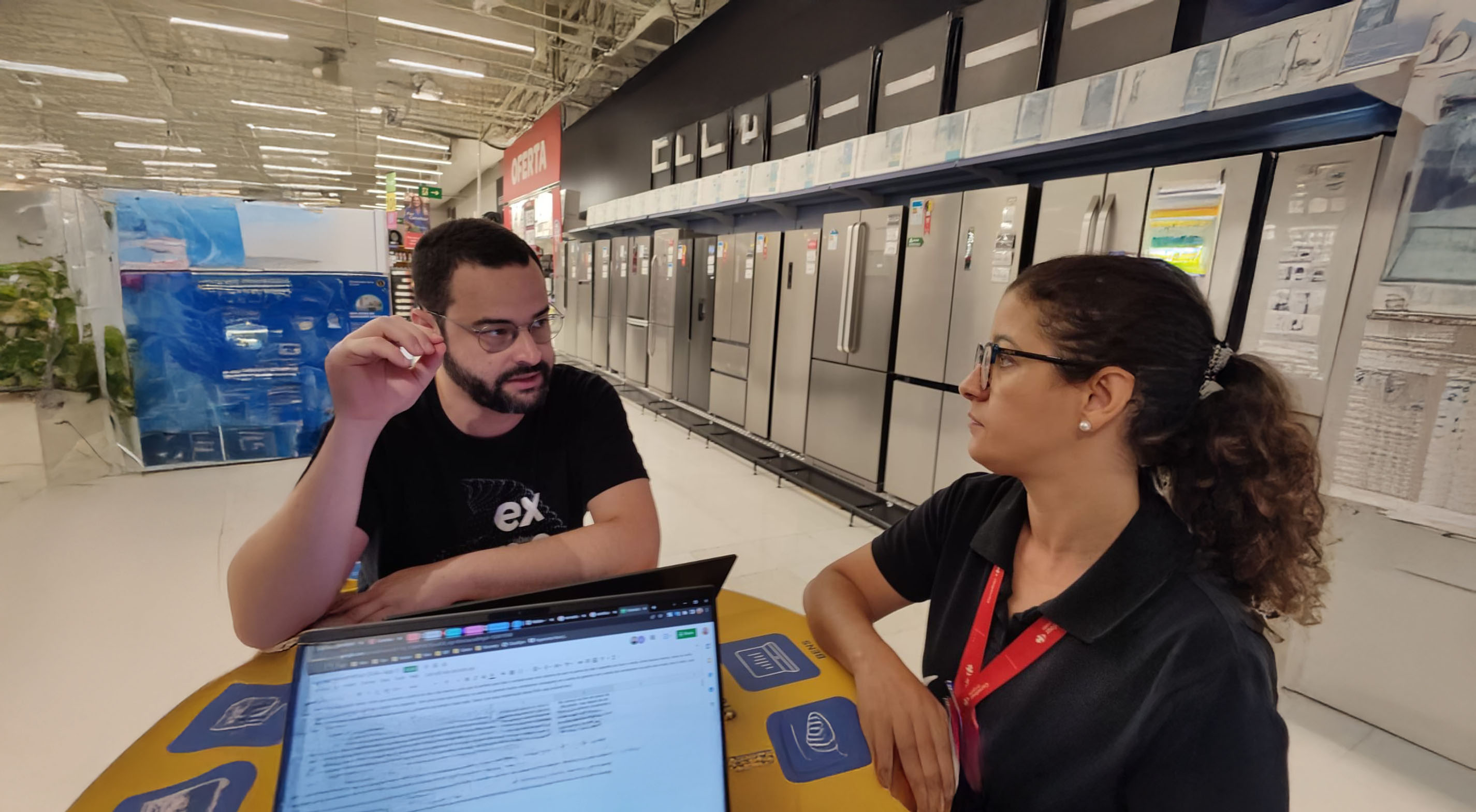
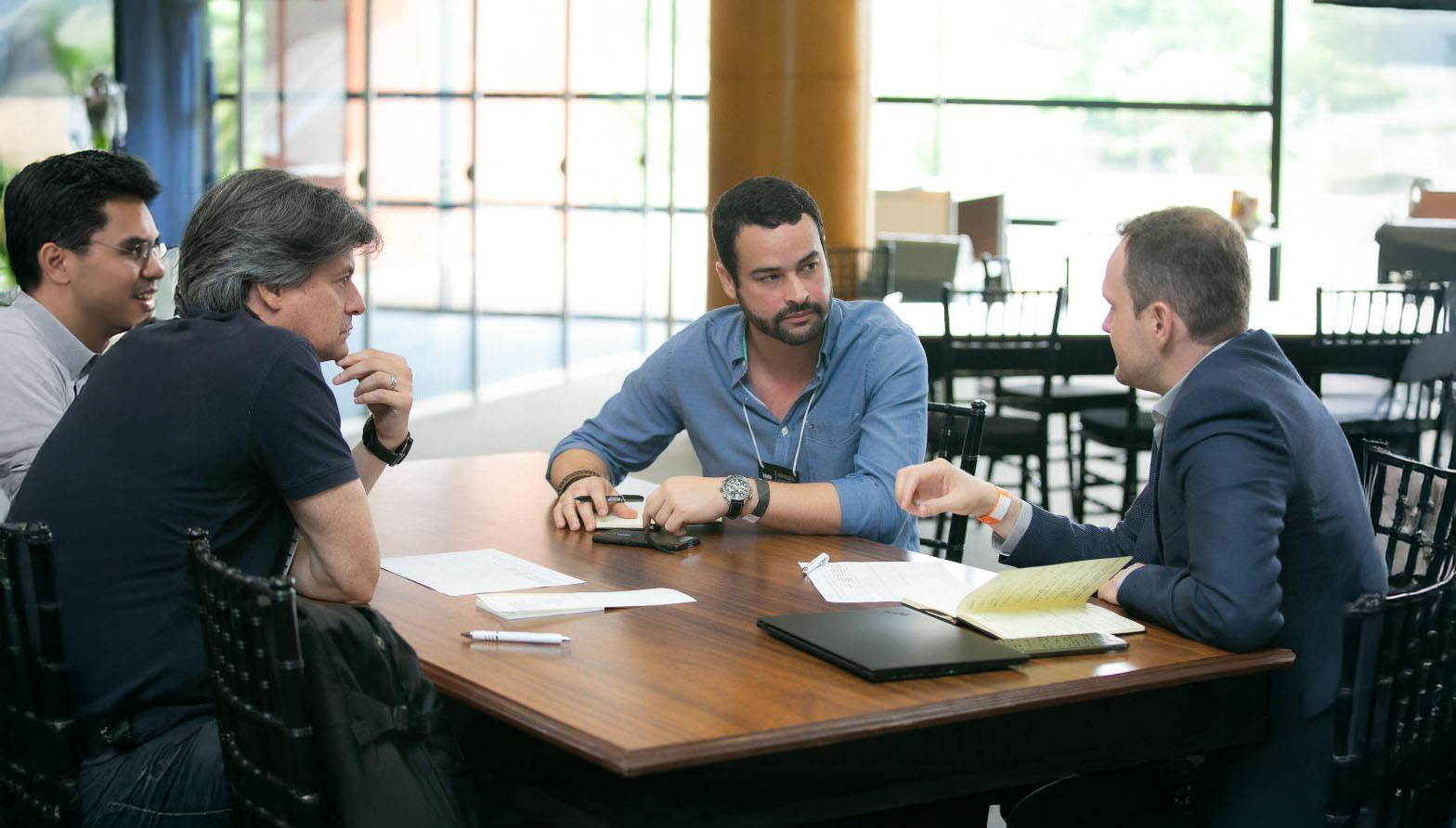
Discovery is one of the most important stages of my workflow. During this phase, I focus on identifying the key points that will define the project. I always make sure to map all stakeholders to conduct exploratory interviews with each of them.
For each interview, I define a list of questions or doubts that I want answered by the end of the conversation. I avoid using rigid scripts or predetermined questions, as this gives me the freedom to explore nuances that emerge organically during the discussion.
All interviews are recorded and transcribed. With this material, I feed a vector database of an AI agent, which becomes a powerful tool that allows me to ask questions and validate ideas throughout the rest of the project.
Wireframing
Once the discovery universe is mapped, I usually already have a good hypothesis of the solution. I like to begin materializing it in wireframes using Miro. In this phase, I am free to sketch screens, flows, and journeys that will form the foundation of the prototype.
I validate these wireframes with stakeholders to gather initial feedback and refine the solution architecture. Many of these adjustments are made in real time during presentations, allowing us to collaboratively reach the final result.
Prototyping
Before creating the actual screens, it is important that the project has a well-organized Figma environment. I usually begin by building a solid Style Guide page, considering the company’s visual identity — colors, typography, and brand language.
A common challenge in this stage occurs when the brand uses colors similar to semantic interface colors such as success, warning, danger, etc. These cases require deeper testing and study to avoid confusing or inconsistent interfaces.
I build all materials using the Atomic Design methodology, componentizing tokens, atoms, molecules, and so on. This ensures consistency and scalability across the entire project.
I like to structure the file using one page per user story, building the journey step-by-step across screens. This improves traceability between Figma and the original product documentation.
Testing and Iteration
In smaller projects or those with tight deadlines, user testing is often cut — especially in software houses working on multiple parallel projects.
In these cases, I negotiate with the Product Manager or Agile Lead to allocate time for testing, explaining that testing is actually a time-saving strategy. Identifying errors in the design phase is much faster than redistributing developer hours to refactor later.
I use Maze for testing, where I upload screens and configure the user journeys. Maze tracks each user interaction and generates precise reports with insights to refine UI and UX.
Handoff
In many tech companies, it’s common to see development and design teams working in silos, which creates an environment with low collaboration and missed learning opportunities.
Throughout my career, I've intentionally learned development tools and languages to ensure smooth communication with developers — after all, they are the ones responsible for implementing the designs I create.
I always work closely with developers, presenting the project, requirements, design rationale, and discussing feasibility for more complex items. This collaboration has given me a strong technical foundation that ensures alignment throughout the project.
Use of Artificial Intelligence
I believe AI is a highly valuable tool that expands a designer’s technical capacity. I use it strategically in several stages of my process, acting as a catalyst for the technical quality of the work I produce. Below are some of my AI use cases:
LLM with Knowledge Base
All information gathered during discovery is carefully processed and tokenized into a vector database connected to an AI agent.
This agent becomes a powerful tool that allows me to access any discovery information through natural language — helping me answer questions, refine scope, and validate solutions without repeatedly relying on stakeholders.
Synthetic Persona
I conduct several structured interviews with groups of users who match the target profile. This data is then used to generate synthetic personas enriched with complete knowledge bases of their characteristics.
For each persona, I create a customized agent that includes the knowledge base and fine-tuned communication style. These agents are essential for running simulations, tests, and validations of multiple solutions.
Desk Research
Using AI tools capable of deep research, I conduct initial studies on markets, competitors, similar solutions, and more. The tool performs the research and delivers a structured report tailored to the criteria I define.
These reports can be delivered as presentations or interactive websites, stored within the project repository.