Impactos Positivos: Voting Platform Design
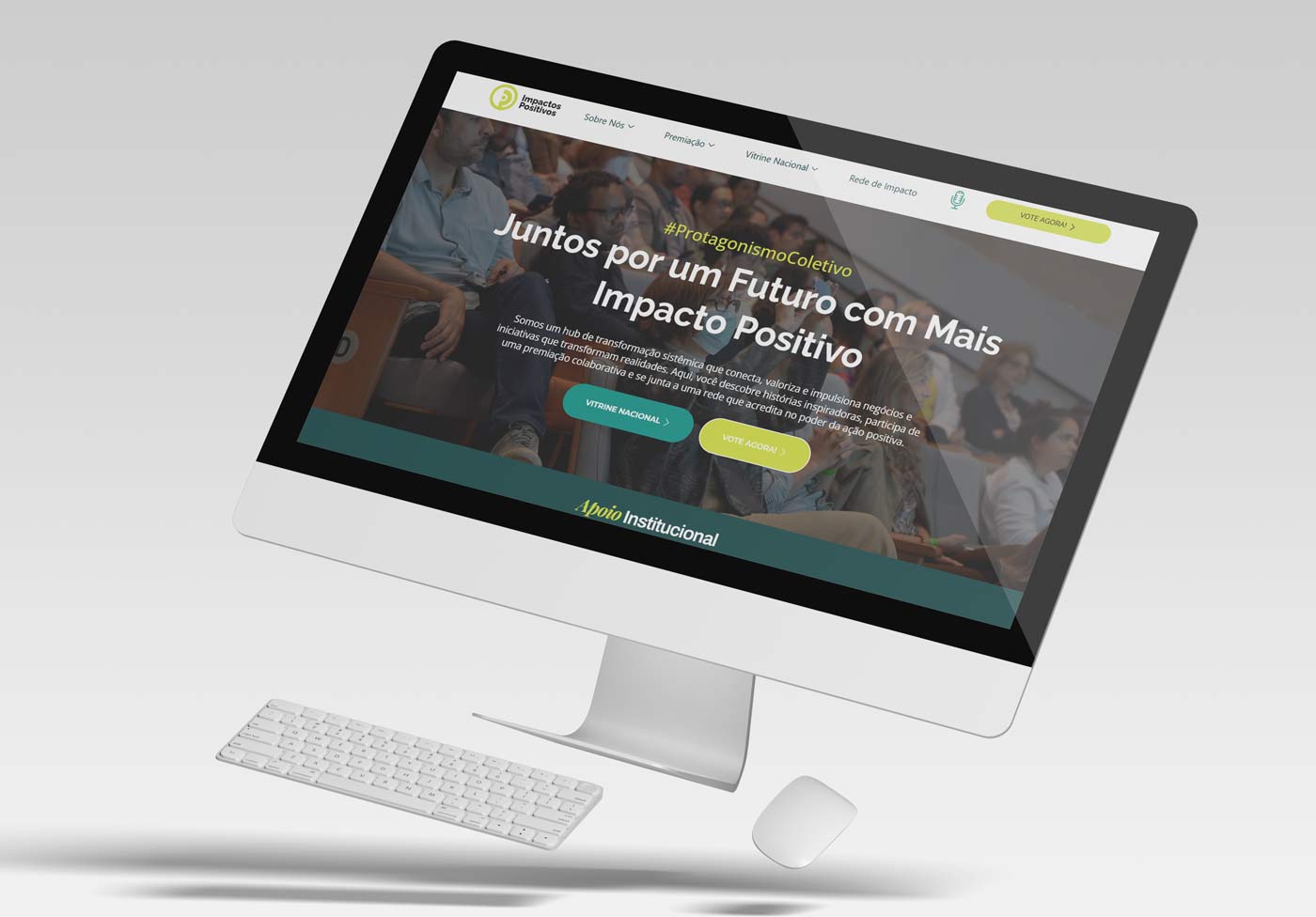
Digital voting platform created for the Positive Impacts Award, capable of handling millions of votes with anti-fraud security and high scalability, promoting social entrepreneurship throughout Brazil.
- Client
- Impactos Positivos Global Platform Inc.
- Year
- 2024
- Categories
- No Code

The Positive Impacts Award is the largest initiative promoting social entrepreneurship in Brazil. The highlight of the program is the election of the most impactful social projects and initiatives across the country.
To make this possible, a nationwide vote is held annually, with hundreds of initiatives registered and thousands of votes submitted within a short period of time. This required building a robust platform for registration, monitoring, and voting, with strong focus on anti-fraud protection and precise vote counting across multiple elimination stages.
Solution
I was responsible for the concept and design of the entire voting platform for the award. The requirements were challenging: the platform needed to support up to 500 submissions, handle traffic peaks of more than 1 million votes per stage, and include solid audit mechanisms and anti-fraud architecture.
It involved three months of intense work, during which I conducted a full analysis of the contest rules and defined all user flows for initiative registration and voting. After this phase, we chose to build the platform using NoCode tools to ensure delivery within the established deadline.
I started by creating the style guide in Figma, based on the project’s brand book. At the same time, I mapped user journeys into dozens of low-fidelity wireframes to validate the proposed solutions with stakeholders.
Once the journey was approved, I completed the high-fidelity design of all screens in Figma to support interface development in Bubble.
The biggest challenge: multi-stage voting
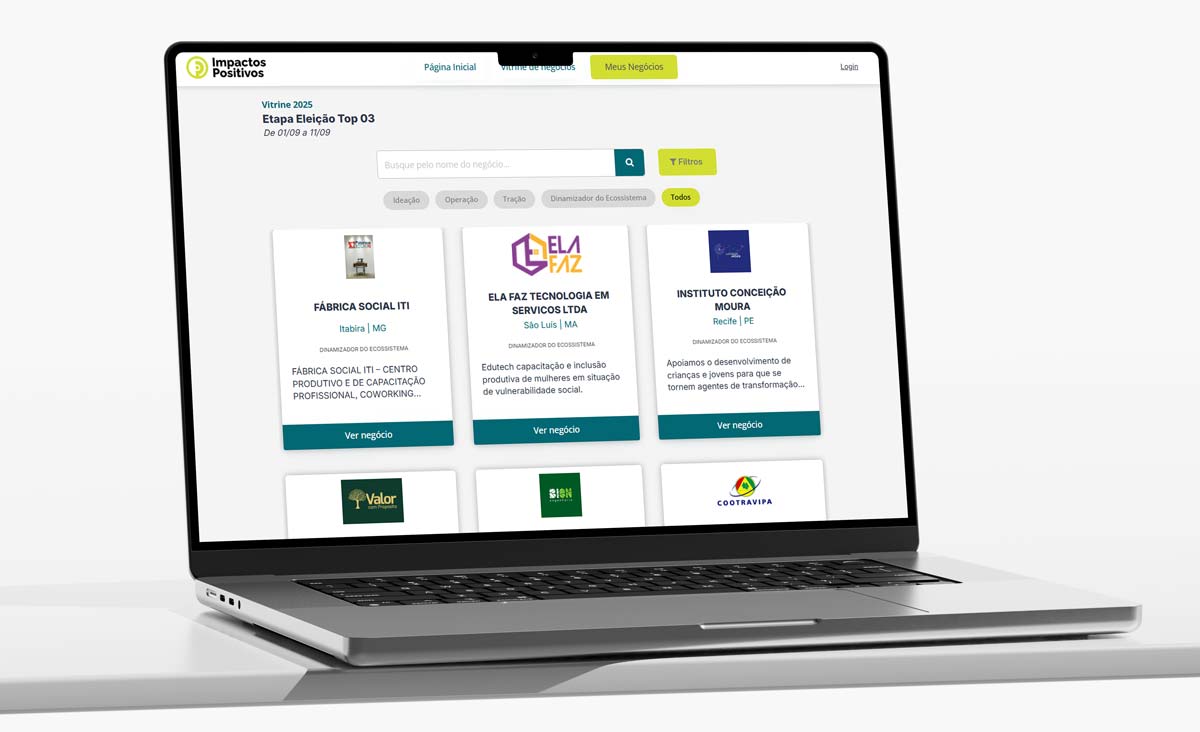
The contest was divided into four elimination stages, and at the end of each stage the least-voted initiatives had to be automatically hidden, while the most-voted ones were displayed as stage winners precisely at midnight of the deadline.
To enable this, I modeled a database that recorded every vote with date, time, user, and stage. All entries were stored in a main table and in a parallel, more detailed database used for auditing.
I implemented automation rules so that at the end of each stage, the system would generate the ranking of initiatives and display only the most-voted ones, blocking further votes for eliminated entries.
Another critical point was ensuring unique votes: the system verified whether a user had already voted in that stage, allowing or blocking new votes based on the recorded history.
Anti-fraud challenges and solutions
During the process, several issues emerged and had to be addressed in real time:
Users registering e-mails with a “+” (e.g., joao+01@gmail.com) to create multiple accounts.
Rapid page refreshes to attempt voting before validation locks were triggered.
Use of fake national IDs (CPF) and temporary emails to create accounts and vote repeatedly.
Keeping the page open after the deadline to try voting late and influence results.
All these behaviors were identified through our real-time monitoring dashboard, which recorded voting logs and enabled quick fixes to bugs that could allow fraud.
Impact
The result was a secure, scalable, and efficient platform that exceeded all expectations. We ensured stability and reliability throughout the entire voting process.
More than 700 initiatives registered, each with its own personalized page including slideshow, video, and description.
More than 120,000 registered users, from 3,000 cities in Brazil and around the world.
A total of 3 million votes counted, making it the largest edition of the award, with 50% growth compared to the previous year.
Learn more at https://impactospositivos.com/