Ademicon: Network Management CRM Product Design
I designed Orbita, a CRM that turns dispersed network data into institutional memory, proactive alerts and operational decisions.
- Client
- Ademicon
- Year
- 2026
- Categories
- UI / Product Design

The Challenge: Turning Dispersed Data into Institutional Memory
Ademicon operates a nationwide network of business Units, Points of Sale and Consultants. The same person may work through more than one company registration, hold several internal registrations and belong to different units. Before Orbita, recovering that history required crossing spreadsheets, WhatsApp conversations, emails and informal manager knowledge.
The challenge was not to create another registration interface. It was to prevent conflicts, agreements, penalties, visits and relevant decisions from disappearing whenever a manager changed. I designed the product to turn dispersed memory into structured, searchable and persistent records with context, authorship and dates.
There was also an operational constraint: the backoffice usually identified risks only after a complaint arrived or an audit found an inconsistency. The experience needed to help teams identify signals before they became incidents.
The Discovery: Turning Discovery Work into a Navigable System
I received Discovery work conducted by Leany Venture, including in-depth interviews and a map of the operation's technology structure. My work began by turning that material into product architecture: I prioritized the MVP, then translated dispersed requirements into journeys, entities, states and interaction criteria.
The key decision was to make the Brazilian individual taxpayer registry number, CPF, the central entity. Instead of splitting one person across registrations, Orbita consolidates their links, company registrations, Points of Sale and corporate relationships in a single view. This decision supports an Economic Group view and reduces the manual data crossing that delayed risk and expansion analysis.

On the dashboard, I organized information into three layers: an executive natural-language summary, priority indicators and an alert center connected to the event feed. Each KPI leads to its corresponding list so investigation does not become a separate journey from the decision point.
The Solution: Nine Modules for Managing the Network as a System
I structured Orbita as a network management and expansion CRM, not as a transactional system. The platform does not issue quotas, process payments or modify the legacy system. It creates an analytical layer to understand operations, record decisions and guide action.
- Dashboard: indicators, critical alerts, event feed and an executive view of the network.
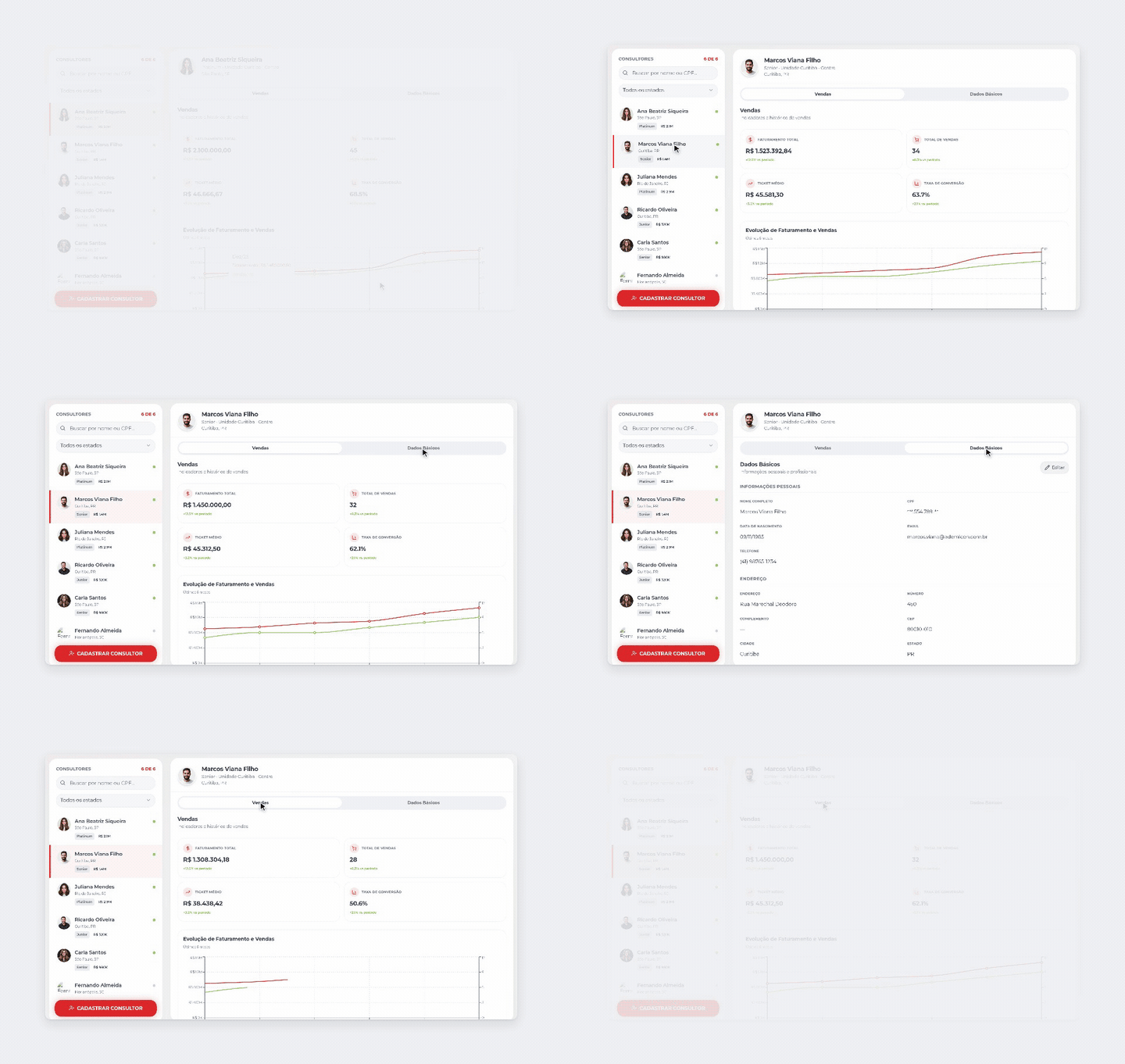
- Units, Points of Sale and Consultants: hierarchical structures with registration data, links, history and indicators.
- Previews: a Kanban accreditation flow with SLA, owner and blacklist signals.
- Events and Visits: relationship logbook, private notes, field agenda and follow-up forms.
- Reports and Settings: parameterized queries, business-rule alerts and an access matrix.
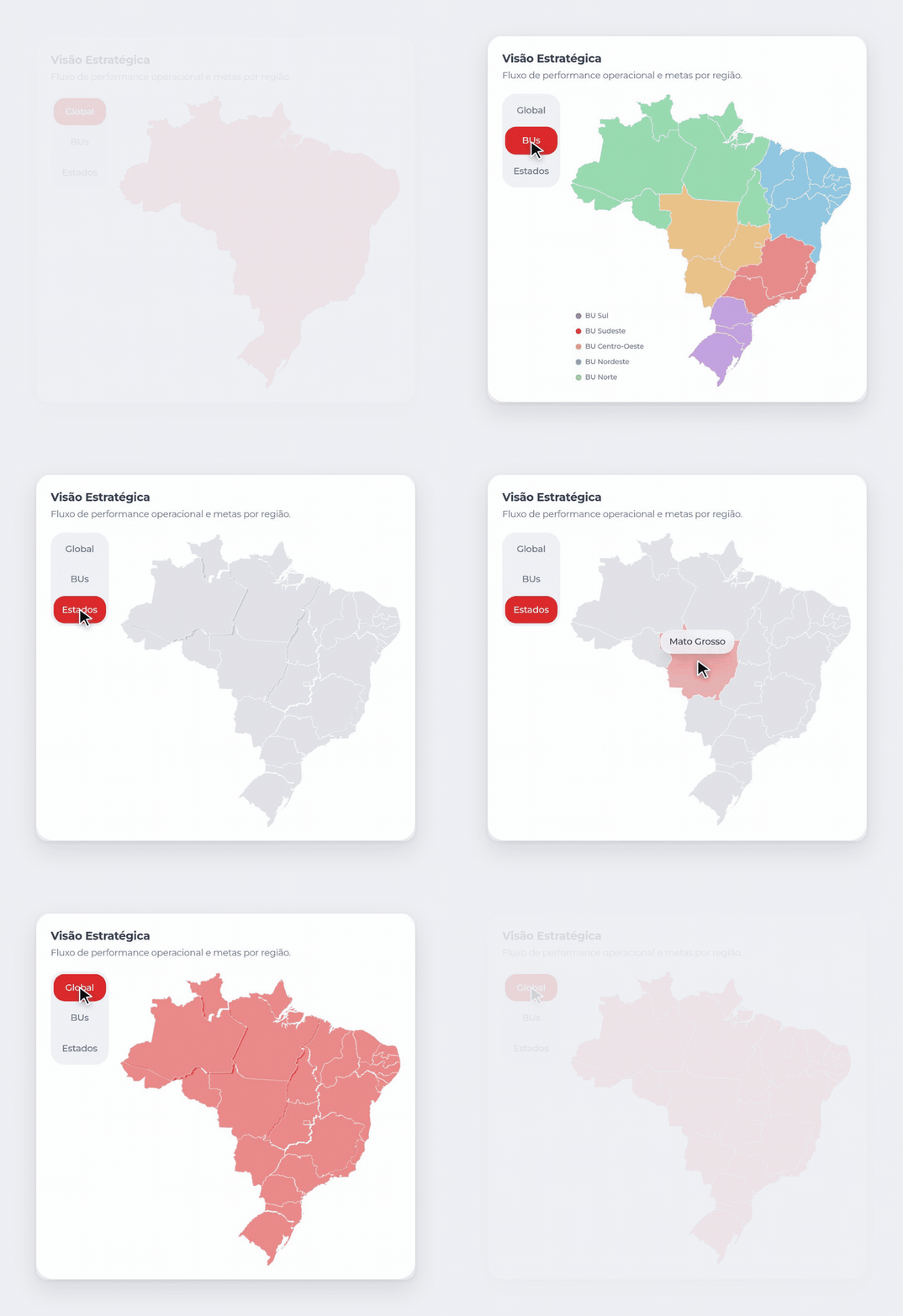
The strategic map and relationship map make the scale of the network and its connections visible. The geographic layer helps directors compare behavior by region and business unit. The relationship layer shows how people, companies and points of sale connect through CPF, company registration or store.
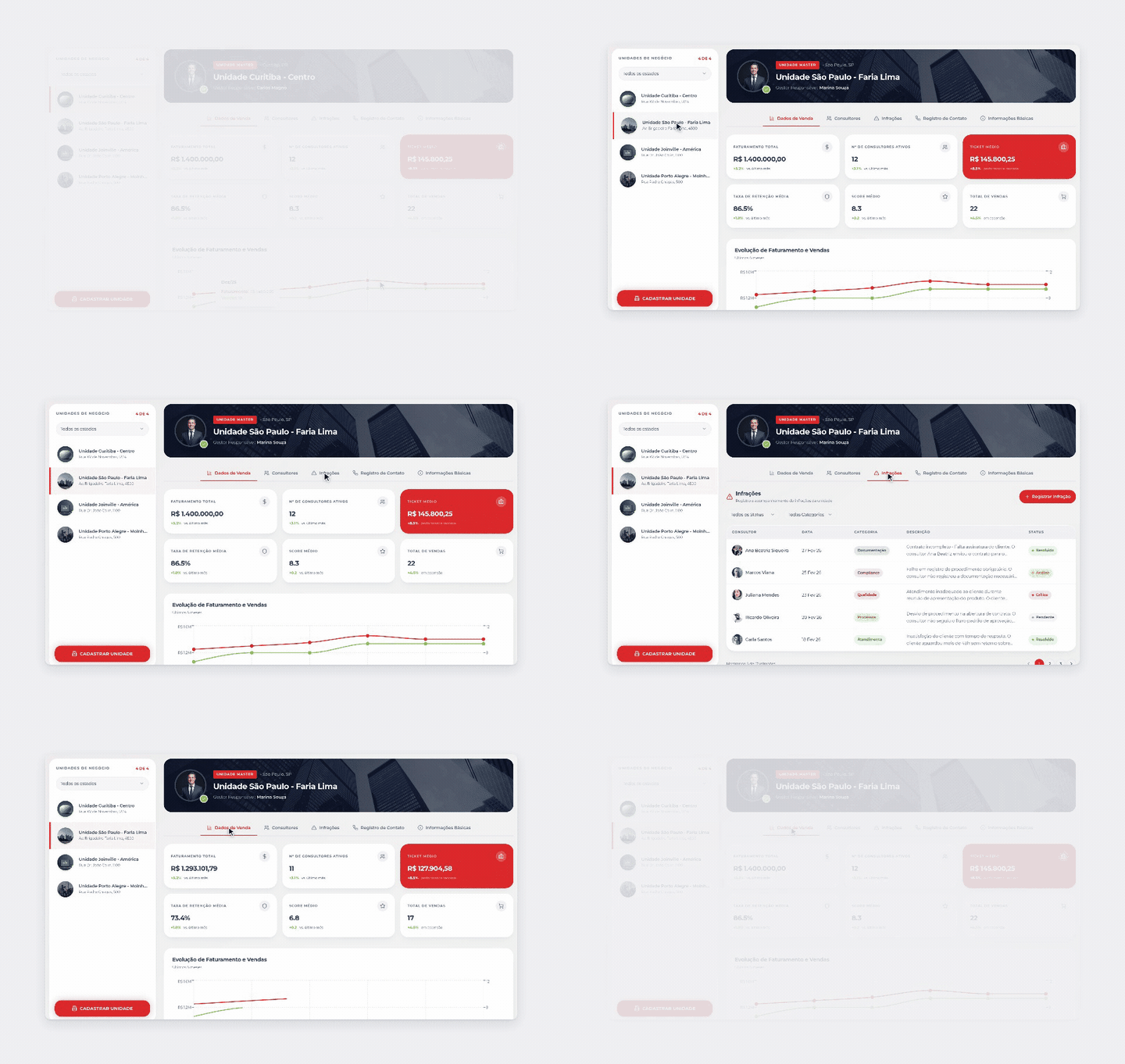
To reduce learning effort, I designed the Point of Sale page with the same structure as a Unit. Their difference is hierarchical, not navigational. Once a user learns one screen, that learning transfers to the remaining network entities.
The Validation Cycle: Agentic Design with Human Supervision
To turn Discovery into an MVP in five days, I developed and applied an Agentic Design harness. The method organized a chain of agents with explicit roles instead of relying on isolated instructions and disposable context.
- Interpret requirements: the requirements-analysis agent extracted functional requirements from the Discovery material.
- Define scope: the product agent prioritized features and delimited the MVP.
- Design the architecture: I turned prioritized requirements into journeys, modules, pages and components.
- Validate coherence: a UX/UI layer checked interaction, consistency and adherence to the proposed flow.
- Record decisions: artifacts and decisions were kept in JSON, Markdown,
memory.mdandclaude.md.
I supervised every handoff, reviewed outputs and corrected deviations before implementation. JSON enabled programmatic use by Claude Code. Markdown preserved human review, readability and context transfer. The PRD became the contract that ordered the build, from the design system through integrations and polishing.
The result was an implementation in Vite, React, TypeScript and Tailwind, guided by a design system, PRD, project memory and continuous reviews. The harness did not replace design judgment: it made decisions traceable and repeatable during an accelerated cycle.
Impact and Design Strategy
The MVP was produced in five days, approved by the client and connected to a contract closed for development by the company's team. In 2026, the solution materialized by Orbita won the Innova Ademicon Open Innovation call, presented by Leany Lean Ventures. The City of Curitiba reports that the company passed technical analysis, proof of concept and an in-person presentation to the evaluation panel, receiving an initial R$100,000 contract proposal.
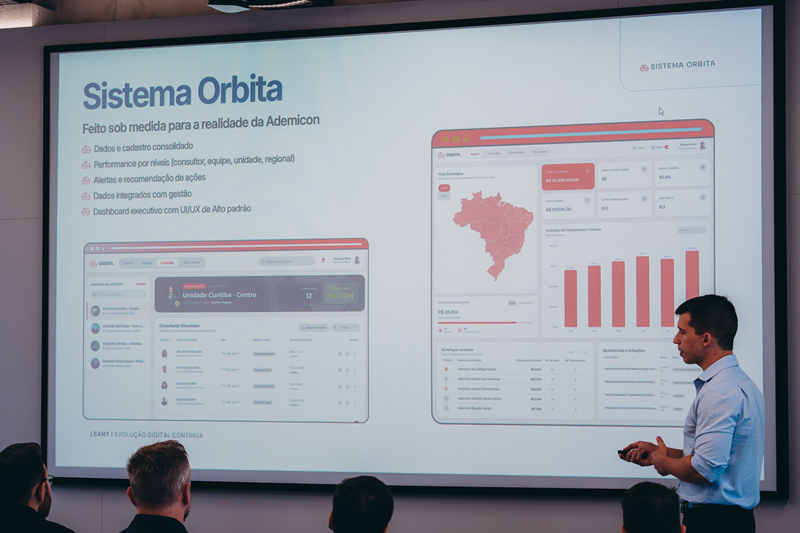
Read the City of Curitiba's official coverage of the Innova Ademicon result.
The central strategy was to move operations from a reactive posture to a preventive one. Alerts can highlight, for example, consultants with no sales for four months, units without a visit for more than 180 days and previews with overdue SLAs. These signals do not replace manager judgment, but reduce the time between noticing a risk and acting on it.
The main learning was that the hardest problem was not technical. It was organizational. Orbita uses product design, information architecture and project memory to preserve context in a constantly changing network, without forcing every new manager to start from zero.