The Architecture of Deterministic Design: How Harness Design Ops Controls AI in Figma
Published on
Discover how Harness Design Ops uses Claude Code and Figma via MCP to create deterministic screens, separating decision from execution.
The Cognitive Friction of AI in Design Systems
During the operational mapping of a workflow this week, I realized something that has always intrigued me. The inconsistency in design systems does not stem from bad intentions, but from the natural entropy of growing teams and scaling systems. When I decided to apply AI to automate screen creation in Figma, the biggest risk wasn't the wrong tool, but component hallucination and the loss of coherence throughout the user journey.
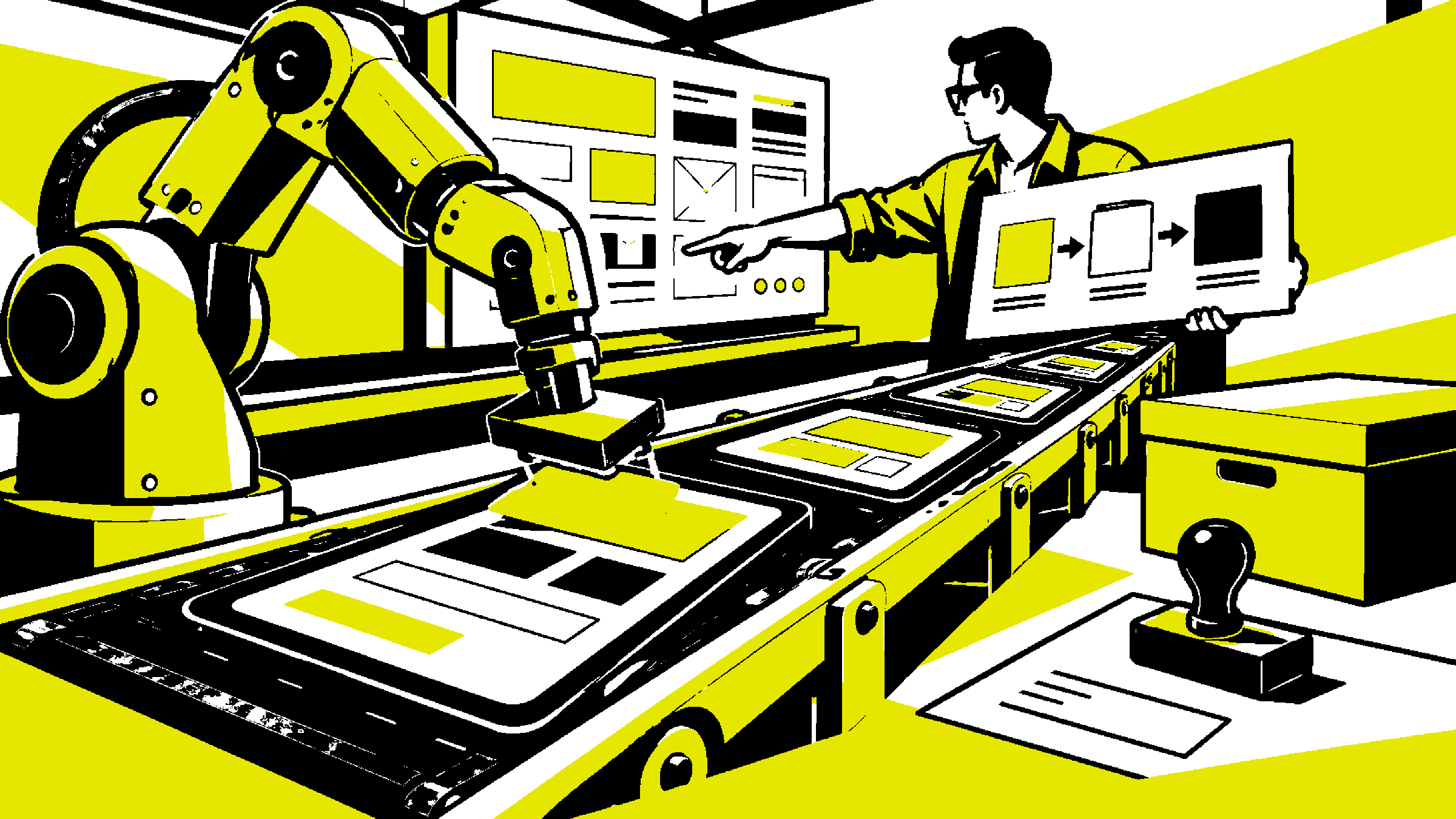
It was from this cognitive friction that I structured Harness Design Ops, a project that connects Claude Code to Figma via MCP. The premise? Deterministic design, where planning and execution are separated by human approval, ensuring the AI creates nothing without a secure architectural "skeleton."
The Architecture of Deterministic Design
The system divides the process into three distinct modules, each focused on mitigating risks and preserving the integrity of the design system:
1. Onboarding: Risk-Free Mapping
The onboarding module focuses on the discovery of understanding. It maps the legacy and generates a complete inventory without touching the original file. This ensures the AI understands the context without introducing new inconsistencies or modifying what already exists.
2. Preflight: On-Demand Reconstruction
Instead of a batch migration that can be disastrous, the preflight rebuilds components on demand for the production file. This eliminates mass migration and focuses on the triangulation of evidence to ensure each migrated component is truly necessary and coherent.
3. Production: The Controlled Daily Cycle
This is the daily cycle that transforms wireframes and user stories into consistent screens, validated against design system rules. Execution is rigorously separated from decision-making, ensuring the AI acts only within defined architectural limits.
The Untouchable Legacy and Institutional Memory
One of the most important pillars of this approach is that the legacy remains untouchable. Decisions become memory in versioned repositories, transforming today's correction into a rule that prevents the same mistake tomorrow. This creates a feedback loop where the AI learns from structure, not entropy.
Automation should not replace design decisions, but rather the repetitive effort of keeping them coherent. Separating planning and execution in design automation is not just a technical choice; it is an anthropological necessity to maintain sanity and coherence in scaling teams.